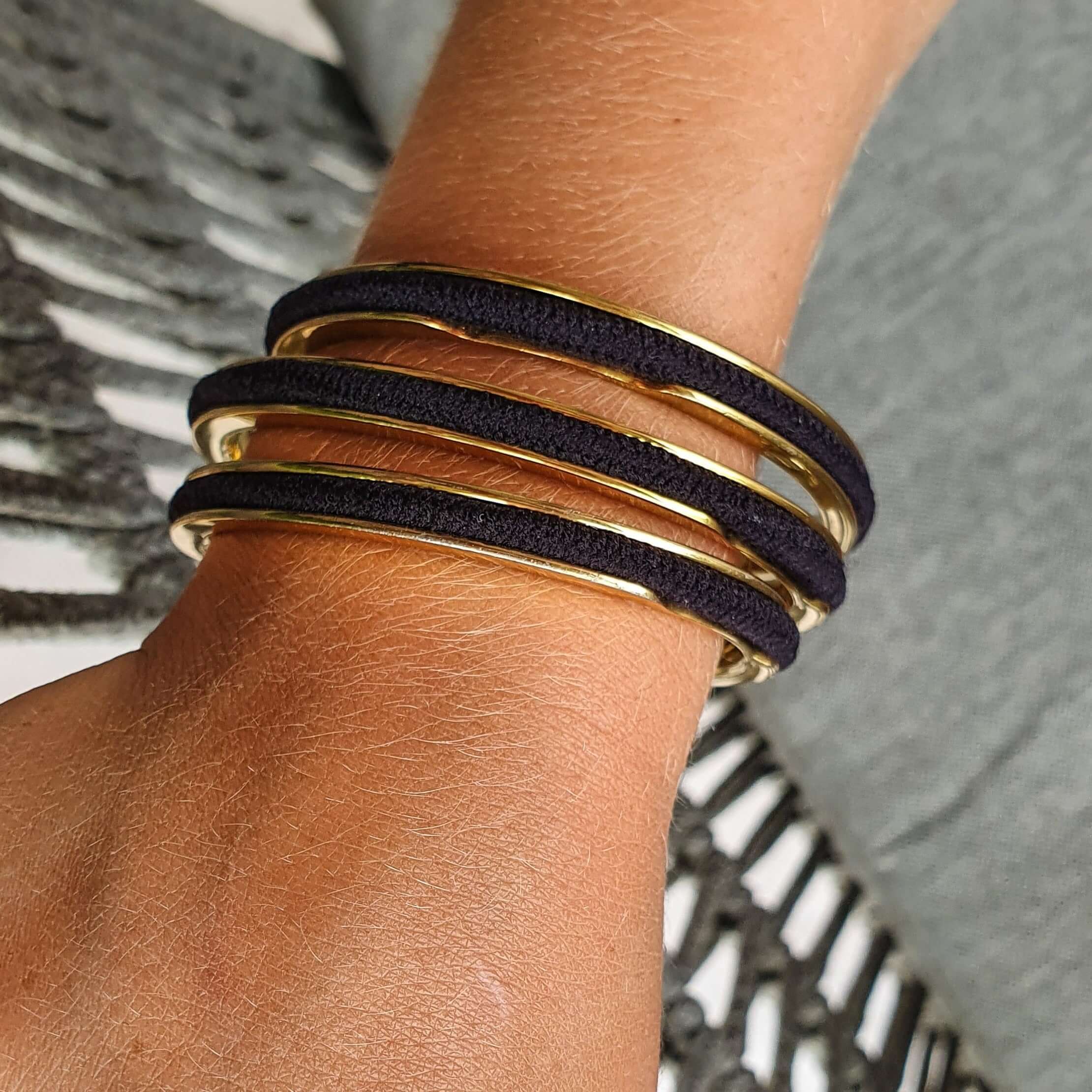

Sensory-friendly jewellery matters more than most people think, especially for autistic adults, people with ADHD, and those with sensory sensitivities.
When people think about sensory-friendly jewellery, they often picture products designed specifically for children. But many neurodivergent adults, including autistic people, people with ADHD, and those with sensory sensitivities, know that the jewellery and accessories they wear every day can make a real difference to their comfort.
When I created the Gypsea Loop Hair Tie Bangle, I wasn't trying to design sensory-friendly jewellery.
I simply wanted a better way to carry a hair tie without wearing a tight elastic around my wrist.
What surprised me was who started reaching out.
Over the years we've received messages from autistic women, people with ADHD, occupational therapists, teachers, parents and healthcare professionals telling us that our bangle had solved a problem they'd struggled with for years.
Some couldn't tolerate the feeling of a tight hair tie digging into their wrist.
Others found themselves constantly moving their hair tie, taking it off, putting it back on again, or avoiding wearing one altogether because they couldn't stop noticing it.
Many simply said,
"I wish I'd found this sooner."
It made me realise convenience was only part of the story. Something as small as an everyday accessory can shape whether someone feels comfortable or agitated all day long.
Rather than trying to explain something I haven't personally experienced, I wanted to speak with someone who lives and works in this space every day.
So I asked Alison, founder of Our Neurodiverse Family, to share her perspective.
Alison is an Au/ADHD adult, former primary school teacher, parent educator, co-owner of a childcare centre and mum of four neurodivergent boys. Her insights below are based on both lived experience and years of supporting neurodivergent families.

Why What You Wear Matters More Than You Think
By Alison Balson - Our Neurodiverse Family
As a primary school teacher in a previous life, an Au/ADHD adult, parent educator, co-owner of a childcare centre and mum of four neurodivergent twice exceptional boys, I've learnt that our nervous systems are constantly gathering information from the world around us, All. The. Time.
Often, when we think about sensory triggers, we picture loud noises or bright lights. These are more of the obvious examples, but one of the most overlooked sources of sensory input is something we can unintentionally wear every single day.
A tight hair elastic, a scratchy clothing label, jewellery that twists or catches on our skin (necklaces anyone!?), or even a watchband that feels "just not right" can place additional demands on an already busy nervous system.
Here are some of the questions I've been asked about sensory friendly accessories.
Can Wearing a Tight Hair Tie on Your Wrist Really Affect Your Nervous System?
Absolutely. Next question!?! Haha.. Ok here's the elaborated answer.
For many people it isn't noticeable, but for someone who is autistic, ADHD or has sensory processing challenges, constant pressure around the wrist can become another piece of sensory information that the brain is trying to process all day.
That doesn't necessarily mean it's painful, it can simply become mentally exhausting.
Some people become increasingly distracted by it. Others continually adjust it, remove it and put it back on again without consciously realising why. It's just 'there', the brain doesn't always clock a conscious thought like "this hair elastic is tight" rather, just an open tab type feeling, constantly refreshing the tab all day long. This alone can bring about a sensory overload.
What Happens When Sensory Needs Aren't Being Met?
One of the biggest misconceptions is that sensory sensitivities are about being "fussy", or the person "getting their own way".
They're not.
When clothing, accessories or textures don't feel "right", many neurodivergent people spend enormous amounts of energy simply tolerating discomfort, and therefore their focus, attention and energy isn't on say school or work or anything else that they need to be doing.
Parents often describe their child as having "nothing left" by the end of the day.
Sometimes that's because their nervous system has been working overtime filtering sensory information.
What Makes Good Sensory-Friendly Jewellery?
Thankfully, more companies than ever are recognising that sensory-friendly jewellery can be both functional and beautiful.
When choosing jewellery or accessories, I encourage parents and adults to look beyond the marketing and instead ask:
- Does this reduce unnecessary sensory input?
- Does it remain comfortable after wearing it for several hours?
- Can I easily remove or adjust it?
- Does it support regulation rather than create distraction?
The most effective products are often surprisingly simple.
What Actually Makes a Good Sensory Support Tool?
Not everyone regulates in the same way.
Some people seek movement. Others seek pressure. Others prefer repetitive tactile feedback.
The best sensory support tools provide predictable, calming input without becoming overwhelming themselves.
Helpful features may include:
- smooth or comforting textures
- gentle movement
- subtle tactile feedback
- light pressure without restriction
- easy access during moments of stress or concentration
Sensory tools aren't only for children. Adults regulate their nervous systems throughout the day too. You may even do it without realising.

Why Does "Wearable" Matter?
One of the biggest challenges with traditional sensory tools is remembering to have them with you. I know, sounds simple hey! But I can relate to this hard.
How often I've wished I had something to fiddle with, only to find them in the car, at home or at the bottom of a bag. None of which are particularly useful when you actually need them.
Wearable supports remove that barrier.
They're always available during:
- school drop off
- meetings
- shopping centres
- long appointments
- travel
- waiting rooms
Sometimes simply knowing something supportive is within reach is regulating in itself.
Why a Hair Tie Bangle Is an Interesting Option
From a sensory perspective, a hair tie bangle is an interesting concept because it combines function with accessibility, and I am totally here for it.
Rather than wearing a tight elastic directly against the skin, it offers an alternative way to keep a hair tie close while potentially reducing the constant pressure many people experience around their wrist.
It also provides a discreet, wearable object that can offer gentle tactile feedback throughout the day without drawing attention.
For many neurodivergent people, the best sensory supports are the ones that naturally integrate into everyday life rather than feeling like specialised equipment.
The goal isn't to eliminate every sensory challenge. You just won't. The goal is to understand how our nervous systems respond and create environments that help us feel calmer, more comfortable, more connected and more at peace.

What We've Learnt at Gypsea Loop
When we launched Gypsea Loop, we simply wanted to solve an everyday frustration.
We never imagined we'd hear from so many people in the neurodivergent community.
Today we regularly receive messages from customers who tell us they chose the Hair Tie Bangle because they dislike wearing a tight hair tie on their wrist, experience sensory sensitivities, or were looking for a more comfortable everyday alternative.
We've also heard from parents purchasing one for their teenage daughters, and from occupational therapists who appreciate products that blend seamlessly into everyday life rather than looking like specialist equipment.
Every person's sensory experience is unique. What feels supportive for one person may not feel the same for another.
But listening to these stories has reminded us how powerful thoughtful product design can be.
Sometimes making life a little easier is about removing one small source of discomfort from your day. Nothing complicated required.

Frequently Asked Questions
Is the Gypsea Loop Hair Tie Bangle a medical device?
No. The Gypsea Loop Hair Tie Bangle is a piece of jewellery designed to hold a hair tie. It isn't a medical device or therapeutic product and isn't intended to diagnose, treat or prevent any condition.
Can adults use sensory-friendly jewellery?
Absolutely. Sensory preferences don't disappear with age. Many adults choose jewellery and accessories based on how they feel as much as how they look.
Is the Hair Tie Bangle suitable for autistic adults or people with ADHD?
Many of our customers who are autistic or have ADHD have told us they enjoy wearing their Hair Tie Bangle because it keeps their hair tie close without it sitting directly against their wrist. Every person's experience is different, so what works well for one individual may not suit another.
Why do some people dislike wearing a hair tie on their wrist?
For some people, it's simply uncomfortable. Others find the constant pressure, texture or awareness of the elastic distracting. Sensory experiences vary from person to person.
What should I look for in sensory-friendly jewellery?
The best sensory-friendly jewellery is comfortable after several hours of wear, easy to remove or adjust, and doesn't demand your attention throughout the day. Simplicity beats novelty for most people.
Final Thoughts
At Gypsea Loop, we've learnt that good design has to fit into real life. Looking good on a shelf isn't enough.
If you've been searching for sensory-friendly jewellery, are looking for an alternative to wearing a tight hair tie on your wrist, or simply want a beautiful and practical way to keep your hair tie close, the Gypsea Loop Hair Tie Bangle may be worth exploring.
It was designed to solve an everyday frustration beautifully. The sensory-friendly angle came later, from listening to our customers.
Hearing how many people in the neurodivergent community have embraced it is one of the best parts of running this business.

About Alison
Alison is an Au/ADHD adult, former primary school teacher, parent educator, co-owner of a childcare centre and mum of four neurodivergent twice exceptional boys. She is the founder and host of Our Neurodiverse Family, where she shares practical, neurodivergent-affirming resources for parents and families.
Podcast: Our Neurodiverse Family
Website: https://www.ourndfamily.com
Instagram: https://www.instagram.com/ourneurodiversefamily_
A note for NDIS participants
If you or someone you care for is an NDIS participant, the Gypsea Loop Hair Tie Bangle may be a supportive daily accessory worth exploring. As a piece of sensory-friendly jewellery, it offers a comfortable alternative to wearing a hair tie directly on the wrist, especially for people who experience sensory sensitivities or find pressure on the skin uncomfortable.
Visit our NDIS Participants page for more information about how our bangle can support daily comfort and sensory needs.